Plastic vs Glass Dry Goods Containers: Which Is Better for Kitchen Organization? | 2026 Guide
If you’re serious about keeping your pantry tidy and functional, you’ve likely considered both plastic and glass dry goods containers. Both promise to organize ingredients, but they do so differently depending on your space and routine. Choosing the right option can make a noticeable difference in how efficient and easy your kitchen feels. Here’s everything you need to know before deciding.
Joshua Leist at Clever Home Finds
5/12/20268 min read
This article contains links that may earn me a commission if you make a purchase. As an Amazon Associate I earn from qualifying purchases.


Plastic and glass containers both improve kitchen organization, but they tackle common problems in distinct ways. Plastic jars are light and stackable, making them ideal for small pantries and busy households. Glass canisters are heavier and more expensive, yet they offer better durability and a non‑porous surface that doesn’t absorb odors or chemicals. Understanding these differences helps you pick the container type that will enhance your kitchen, protect your food, and save you time day after day. In this article we compare plastic dry goods containers against glass dry goods containers to help you invest wisely. If you're simply looking for a way to store leftovers or your meals for the week, check out our review of The 7 Best Meal Prep Container Options.


Quick Answers Guide
Best for Space‑Saving: Plastic
Plastic jars are lightweight and can be stacked or nested, and some collapsible versions save even more space. Since plastic containers are light and often collapsible, you can pack them tightly and carry several at once without adding significant weight.
Best for Ease of Use: Plastic
The light weight and unbreakable nature of plastic make it easier to handle, especially for kids’ lunches and travel. Plastic jars are convenient for transporting food to work or school because they won’t shatter if dropped and some include compartments for sauces.Best for Durability: Glass
Glass containers resist warping, staining and odor absorption, and can last decades if not dropped. Good‑quality glass doesn’t warp or melt over time and remains clear and odor‑free even after repeated use.Best Overall for Most Homes: Glass
For most kitchens, glass provides the best balance of health, durability and long‑term value; plastic is better only when weight and portability are crucial. Although heavier, glass containers protect food from chemical leaching and odors while offering long‑lasting performance.
For most people, glass dry goods containers offer the best balance of usability, efficiency and long‑term value.
What Is a Plastic Dry Goods Container?
A plastic dry goods container is a lightweight storage jar made from food‑grade plastics and fitted with a tight‑sealing lid. These containers are commonly used in pantries, refrigerators and lunch bags to keep ingredients, snacks or crafts safe from moisture. Because they are inexpensive and available in many sizes, plastic containers thrive in small kitchens, travel situations and households with children. They solve problems like cluttered pantries and fragile glassware by being stackable and difficult to break.
What Is a Glass Dry Goods Container?
A glass dry goods container is a jar or canister made of tempered or borosilicate glass paired with an airtight lid. Unlike plastic, glass is non‑porous and does not absorb stains or odors. These containers are ideal for storing flours, grains, coffee beans and other dry ingredients because they protect food from moisture while allowing you to see contents at a glance. Glass thrives in kitchens where health, aesthetics and long‑term durability matter. Although heavier and pricier than plastic, glass canisters also double as serving dishes and withstand high heat.


Key Differences That Matter
Space Efficiency
Plastic jars win when space is tight. Since they’re light and often collapsible, plastic containers can be nested or stacked to maximize shelf area. Glass canisters, especially square sets, do save some space in a pantry but cannot collapse or nest and add weight to shelves. If your pantry resembles a stackable pantry storage bin system, plastic jars integrate seamlessly while glass may require sturdier shelving. You can continue to maximize your space by selecting an option in our review of The 7 Best Produce Organizers for all of your fresh goods!
Ease of Use
For daily use and portability, plastic is easier. Plastic containers are unbreakable, making them ideal for busy households and children’s lunches. Glass offers superior visibility and can go from pantry to oven or microwave, but the added weight means you’ll handle them more carefully. Tight‑sealing lids exist on both types, though glass lids with silicone seals often feel more secure.
Installation & Setup
There is no installation, but there is an initial investment. Plastic jars are inexpensive and widely available, so you can organize a pantry quickly and on a budget. Labeling them is straightforward, as many sets include markers and labels. Glass sets cost more up front but often arrive in multiple sizes with airtight bamboo lids, reducing the need to buy additional accessories. Their clear walls also make labeling less critical, which suits a minimalist kitchen setup.
Durability
Glass offers better long‑term durability. Good‑quality glass containers are non‑porous, free from chemicals and resistant to stains or odors. They can withstand high heat and be used in ovens or microwaves without warping. Plastic containers are more likely to warp, crack or absorb odors over time, especially if used for staining foods or heated repeatedly. While plastic won’t shatter if dropped, it may need replacement after a few years.
Price & Value
Plastic containers cost less up front. A 24‑pack of plastic jars may cost less than half the price of a glass set. However, glass containers offer better value over time: they last longer and protect food quality. Plastic jars require replacement more often, and their environmental impact is greater because only a small percentage of plastics are recycled. Glass is fully recyclable and can last decades with care, giving you more value in the long run.


General Pros & Cons
Plastic Dry Goods Containers
Pros:
Lightweight and easy to carry, making them ideal for small spaces and on‑the‑go use.
Inexpensive, allowing you to buy large sets to organize an entire pantry on a budget.
Often stackable or collapsible, saving space in tight cabinets.
Cons:
Can leach chemicals into food when heated and may retain odors or stains.
Less durable long‑term; plastic can warp, crack or become cloudy with repeated use and washing.
Glass Dry Goods Containers
Pros:
Non‑porous and toxin‑free; glass doesn’t absorb odors and doesn’t release chemicals into food.
Highly durable and versatile, suitable for prepping, cooking, serving and storing.
Airtight seals keep food fresh longer and allow easy visibility of contents.
Cons:
Heavier and more fragile; dropping a glass jar can result in breakage.
Higher up‑front cost compared to plastic sets, especially for larger collections.
Top Rated Plastic Dry Goods Containers
24-Pack Food Storage Jars (8 oz.)
Credit: Amazon
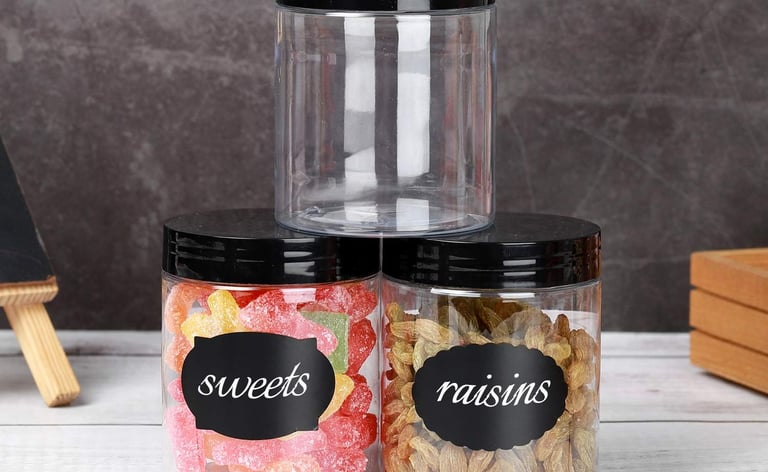
Designed for households that need a large number of small containers, the Dabacc 8 oz plastic jars come in a 24‑pack with airtight screw‑on lids. They’re ideal for families with children or anyone organizing a pantry of spices, snacks or craft supplies. This set solves the problem of cluttered cabinets by providing uniform jars that stack neatly and include labels and a marker for easy identification. Compared to other plastic jars, the Dabacc set stands out because each container is leak‑proof and BPA‑free, ensuring that contents stay fresh while remaining budget‑friendly.
Capacity: 8 oz. per jar | Material: Plastic | Dimensions: 2.68″ mouth diameter × 3.31″ height × 2.87″ base | Special Features: Airtight screw‑on lid, labeling marker and stickers included.
Top Rated Glass Dry Good Containers
ComSaf 6-Pack Variety Set Food Canisters
Credit: Amazon
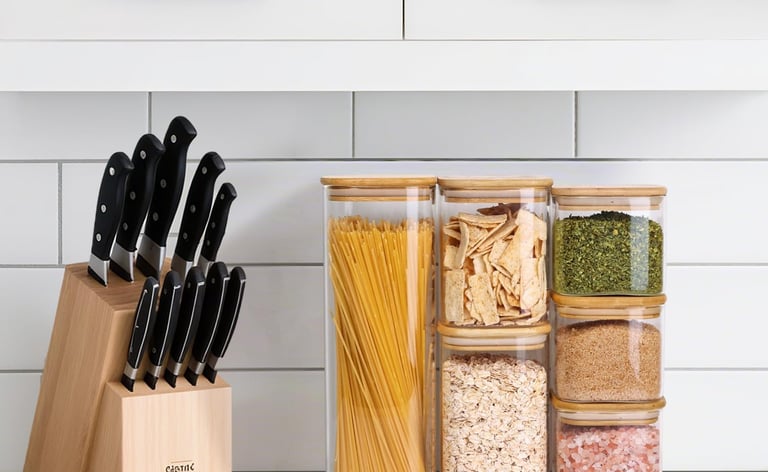
For cooks who value durability and design, the ComSaf glass canister set offers a mix of sizes (0.6 Qt. to 2.2 Qt.) with bamboo lids and silicone seals. This set solves problems like stale flour and spilled grains by creating a moisture‑resistant barrier that keeps food fresh. The square shape maximizes shelf space and the wide mouth design makes scooping and cleaning easy. Compared to other glass sets, ComSaf’s jars stand out for their versatility: the borosilicate glass is microwave‑safe and freezer‑safe, while the bamboo lids provide a natural look and snug seal.
Capacity: 2.1 L maximum | Material: Borosilicate glass with bamboo and silicone lid | Dimensions: 3.9″ wide mouth; square base | Special Features: Airtight silicone seal, clear walls for visibility, multiple sizes per set.
When You Should Choose Plastic Dry Goods Containers
Plastic dry goods containers excel in specific scenarios:
Small apartments or tiny pantries: In cramped spaces where every inch counts, lightweight plastic jars can be stacked or nested without stressing shelves.
Families with children or travel needs: Plastic containers won’t break if dropped and are lighter to carry to school lunches or picnics.
Temporary or occasional storage: If you’re renting, moving frequently or experimenting with pantry organization, inexpensive plastic jars let you try different layouts without a major investment.
When You Should Choose Glass Dry Goods Containers
Glass dry goods containers are the better choice in these situations:
Health‑conscious kitchens: Use glass if you want to avoid chemical leaching and endocrine‑disrupting substances associated with heating plastic.
Home bakers and cooks: Glass jars allow you to see levels of flour, sugar and beans, and the airtight seals keep ingredients fresh longer. They can also go from pantry to oven or microwave without transferring foods to another dish.
Long‑term storage and aesthetics: If you have open shelving or a pantry you’re proud to display, glass canisters provide a clean, uniform look and resist odors or stains.
Final Thoughts
Both plastic and glass containers improve kitchen organization, but the better choice depends on your priorities. Plastic jars are affordable, lightweight and space‑saving, making them suitable for small spaces, children and travel. However, plastic can leach chemicals when heated and may warp or stain over time. Glass canisters, while heavier and more costly, offer superior durability and health benefits: they’re non‑porous, resistant to odors, and recyclable. For most kitchens focused on long‑term value and ingredient freshness, glass is the clear winner. Ultimately, investing in the right containers now will help you maintain an organized pantry, reduce waste and enhance everyday cooking. On that note, be sure to check out a couple of our guides, such as How to Declutter and Organize Kitchen Drawers or How to Clean Out and Organize Cluttered Kitchen Cabinets in order to learn more about creating a kitchen that works for you!
Shop Recommended Kitchen Organizers
If you're ready to put these ideas into action, the right tools can make a big difference. A few well-chosen organizers can help maximize space and keep everything in its place long-term. Take a look at some of our favorite choices from Amazon’s top options.
Expertise
Joshua Leist writes about home organization with a practical, research-driven focus on solutions that improve how everyday spaces function. His perspective is shaped by firsthand exposure to well-designed homes, where thoughtful storage and layout choices make a measurable difference in daily living.
Alongside this, his past experience living in dorms and shared housing built a strong understanding of small-space challenges, where efficient organization is essential. With a background as a writing advisor, Joshua emphasizes clear structure, evidence-based comparisons, and transparent pros and cons. All recommendations are selected independently to help readers make confident, practical decisions for their homes.
Contact
© 2026. All rights reserved Clever Home Finds.
Weekly Home Finds
Clever Home Finds participates in the Amazon Services LCC Associates program.